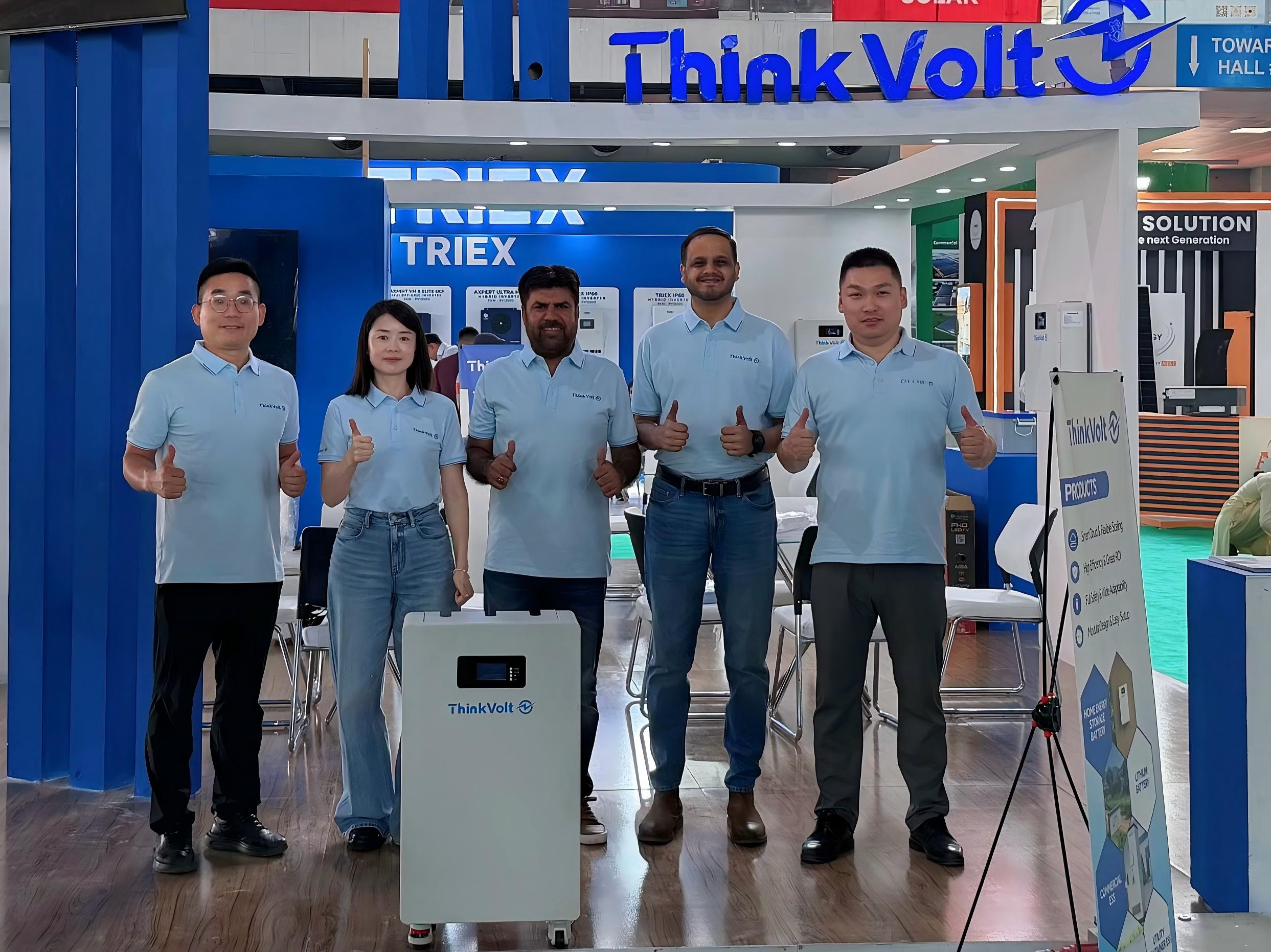
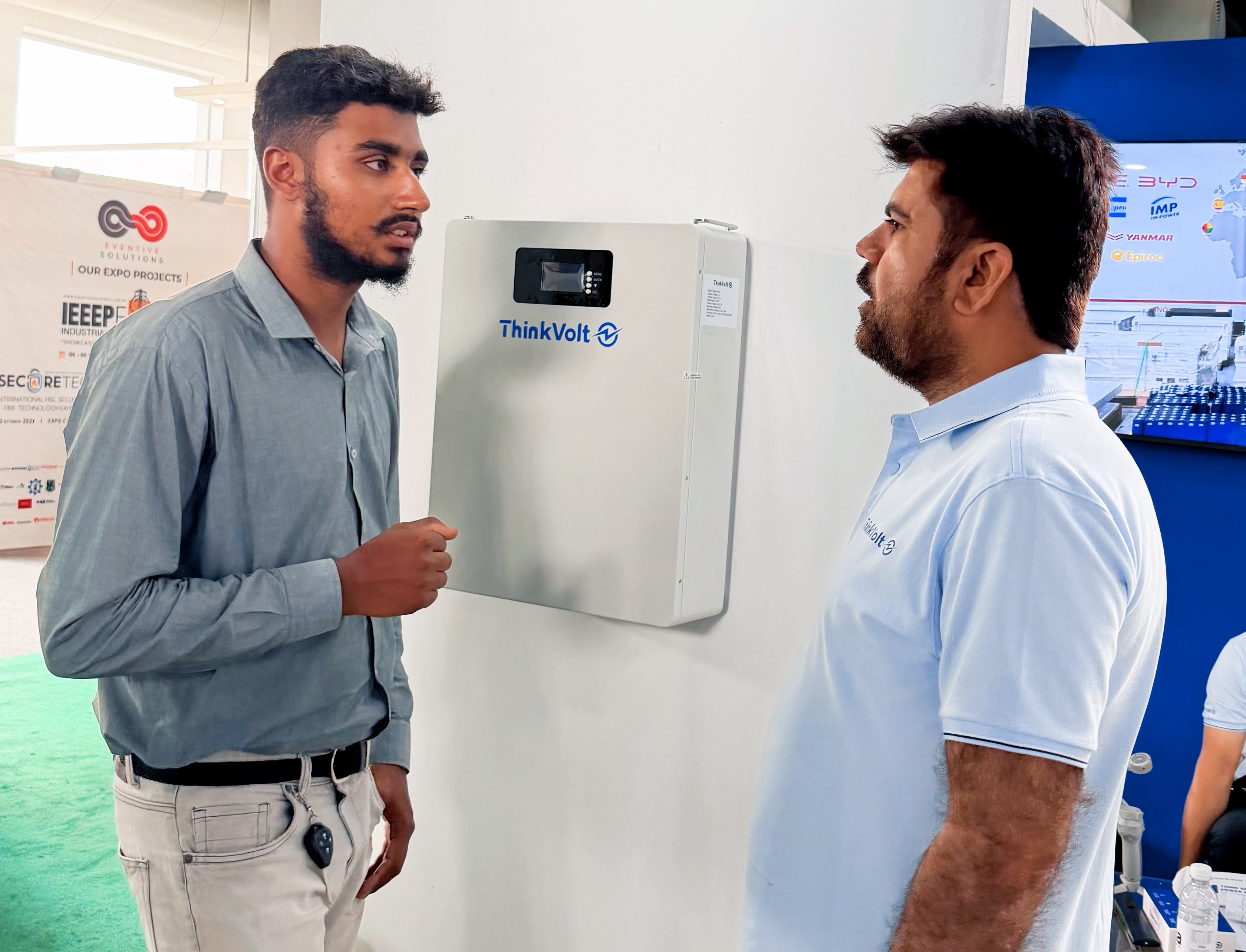
ThinkVolt at Solar & Storage Expo Pakistan 2026: Connecting with Pakistan’s Energy Storage Market
2026-07-23
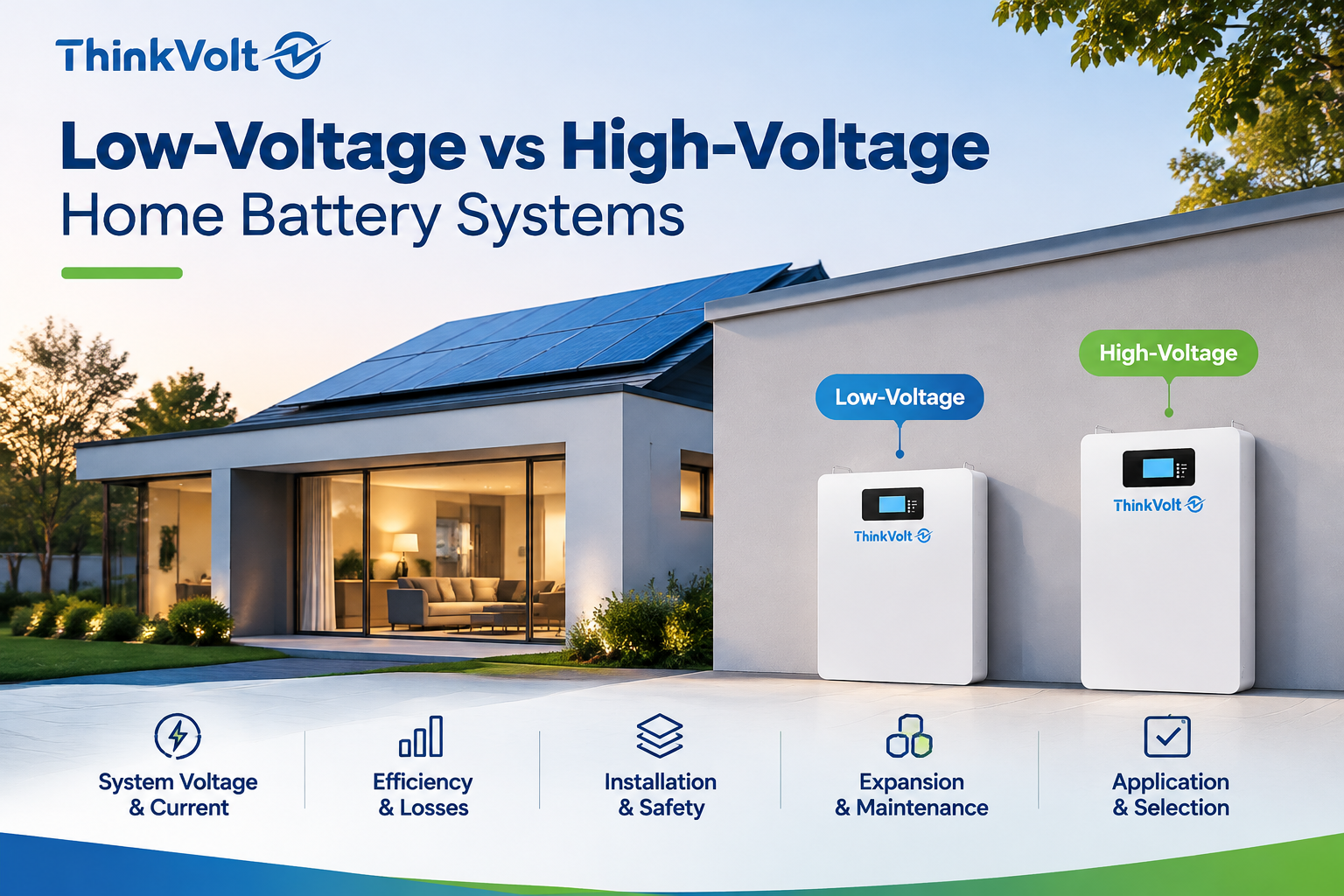
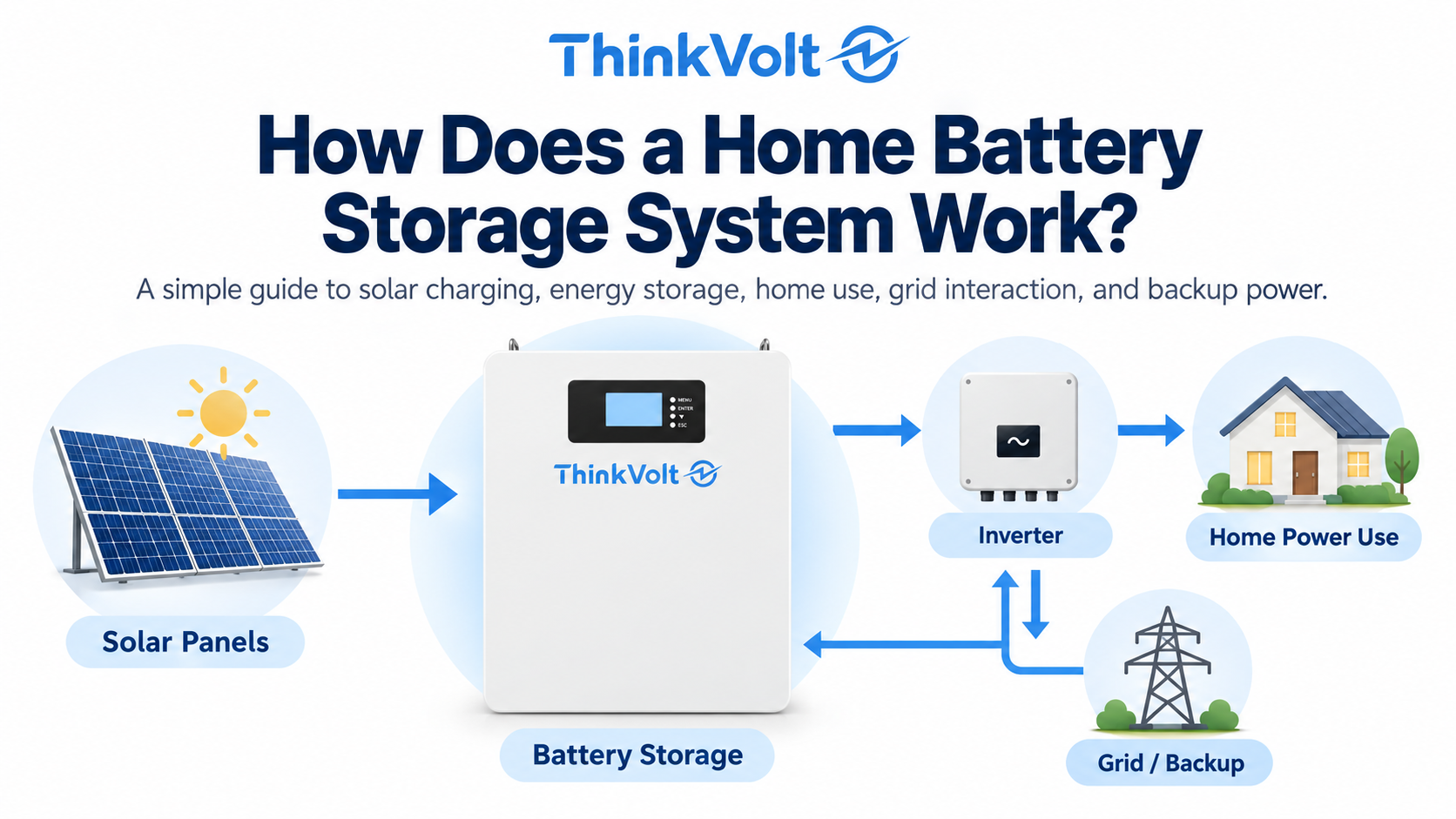
Low-voltage (LV) and high-voltage (HV) home battery systems can both store solar energy and provide backup power, but they use different DC architectures. LV systems commonly operate around 48V or 51.2V nominal, while residential HV systems use series-connected battery modules to reach a substantially higher DC voltage. The right choice depends first on the inverter’s battery input requirements, then on power demand, installation conditions, expansion plans and service capability.
For installers and distributors, the decision is not simply “low voltage is cheaper” or “high voltage is more efficient.” Higher voltage reduces current at a given power, which can simplify conductors and reduce resistive losses. LV systems, however, can offer a familiar 48V ecosystem, flexible parallel expansion and a practical fit for many residential and off-grid applications. Both architectures need correct system design and exact-model compatibility checks.
A low-voltage home battery is commonly built around a nominal 48V or 51.2V DC platform. A typical 51.2V LFP battery uses 16 cells in series, although the actual operating voltage changes with state of charge, cell limits and BMS control. Additional supported battery units are commonly connected in parallel: system voltage remains in the same range while available capacity and current capability increase within the manufacturer's limits.
A high-voltage battery system uses more cells or battery modules in series to create a higher DC operating voltage. Residential products may operate at a few hundred volts, but there is no single universal HV range across all manufacturers or markets. Some systems use a control or power-management unit to coordinate the battery modules, contactors, pre-charge sequence and communication with the inverter.
The terms “low voltage” and “high voltage” are market descriptions rather than a complete specification. Always use the battery's nominal voltage and operating-voltage range from its datasheet. Do not assume that every product labelled 48V has the same voltage window, current limit or inverter compatibility.
At the same DC power, a higher battery voltage requires less current. This is one of the most important practical differences between LV and HV architectures. The relationship is expressed as P = V × I, where P is power in watts, V is voltage in volts and I is current in amperes.
For illustration, a 5kW DC load at a nominal 51.2V requires approximately 97.7A before conversion losses. At 400V, the same ideal DC power requires 12.5A. These are simplified calculations, not design current values: actual battery voltage, inverter efficiency, transient loads, BMS limits and operating conditions must be included when sizing a system.
The higher current in an LV system makes cable cross-section, cable length, terminal quality, busbar design, overcurrent protection and connection torque especially important. Poorly made or loose high-current connections can create local heating and reliability problems. An HV system generally allows lower-current conductors for the same power, but its cables, connectors, switchgear and protection devices must be rated for the actual higher DC voltage and fault conditions.
Installers should not select cable sizes from nominal voltage alone. Follow the inverter and battery manuals, applicable electrical codes and the approved project design. Check continuous and peak current, permitted voltage drop, installation method, ambient temperature, cable routing and protection coordination.
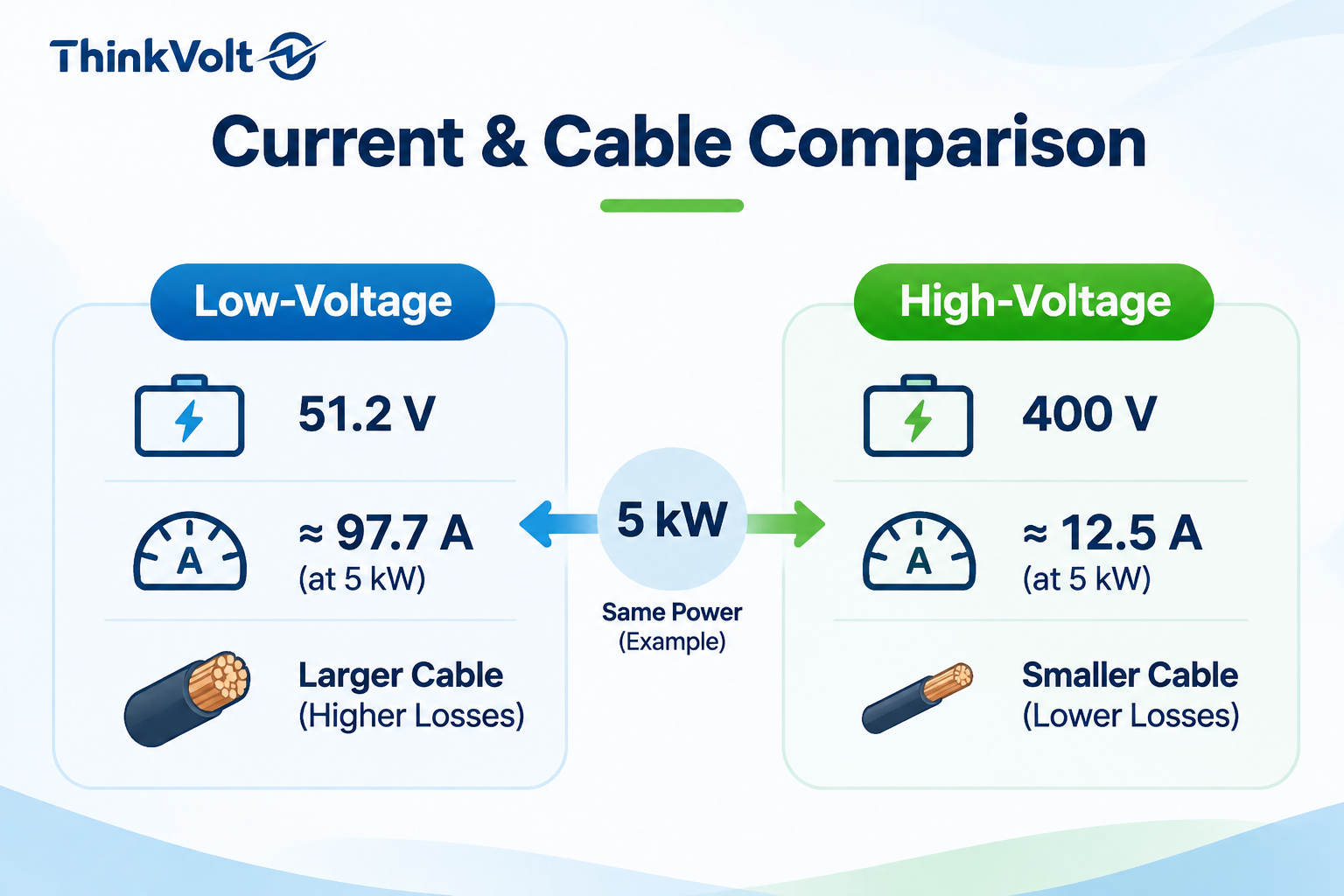
An HV battery can reduce resistive losses in the battery-side conductors because current is lower for the same transmitted power. This can be valuable where power is relatively high or the DC cable run is longer. However, lower cable losses do not automatically mean that every HV system has higher overall round-trip efficiency.
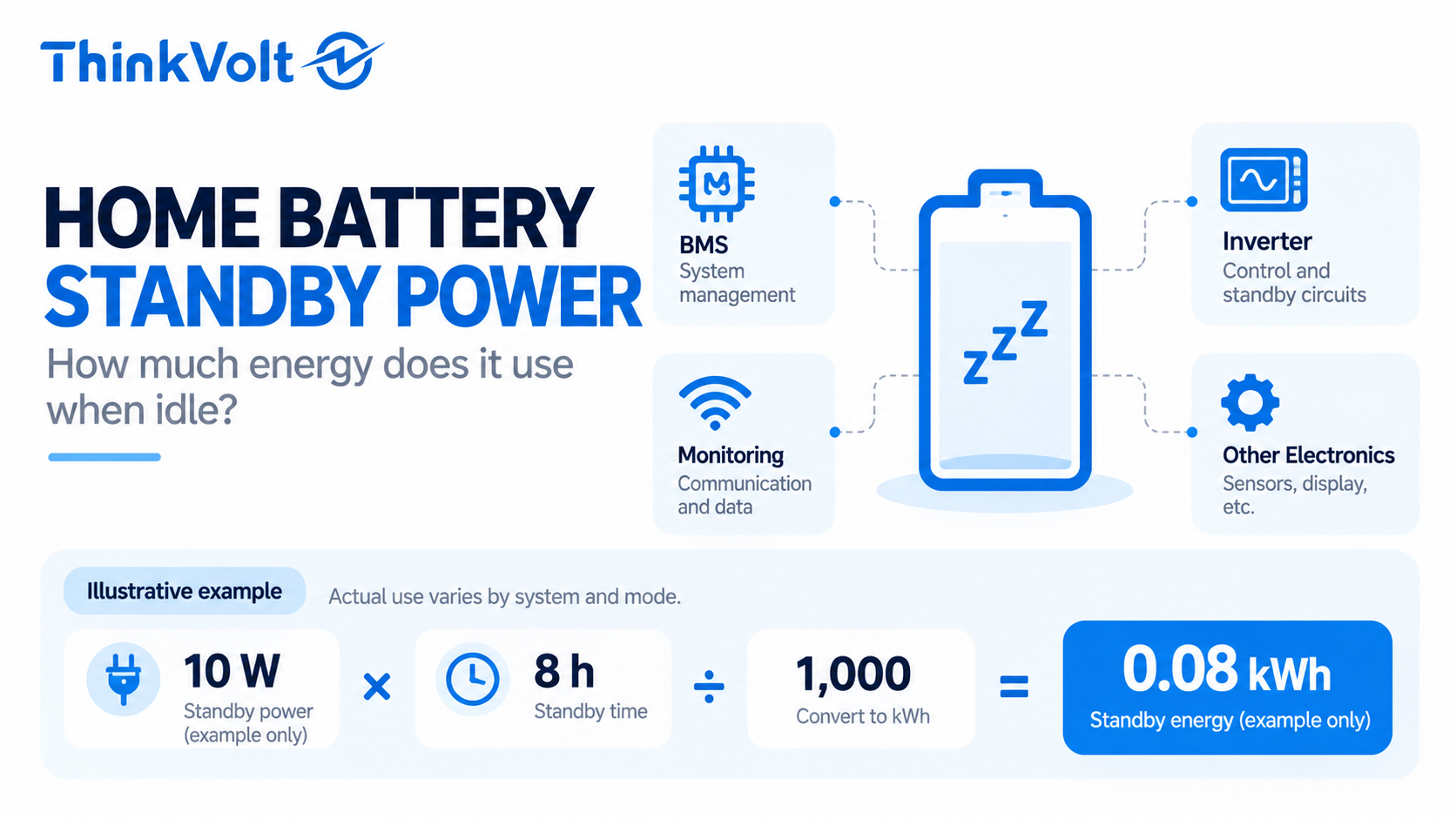
System efficiency depends on the complete conversion path: battery chemistry and operating window, BMS consumption, DC/DC stages, inverter topology, charge and discharge power, standby consumption, temperature and control strategy. Some LV inverter architectures may require a different voltage-conversion stage from an HV design; the impact depends on the actual equipment rather than the voltage label alone.
When comparing quotations, ask for the efficiency definition and test conditions. Distinguish battery-cell efficiency, battery-system efficiency and AC-to-AC or DC-to-AC system round-trip efficiency. Compare figures measured at similar power levels, temperatures, usable capacity and operating conditions. Avoid using a generic percentage advantage for either architecture without a like-for-like test report.
LV systems are often more familiar to installers who already work with 48V off-grid and residential storage equipment. Their higher DC current still requires careful conductor sizing, secure terminations, correct polarity, suitable disconnects and short-circuit protection. “Low voltage” does not mean risk-free: a battery bank can deliver very high fault current, and incorrect wiring can cause burns, fire or equipment damage.
HV systems require additional attention to DC voltage ratings, isolation, interlocking, pre-charge, contactor operation, insulation monitoring where specified, and the manufacturer's shutdown and service procedures. A DC arc can be difficult to interrupt, so installers must use components specifically rated for the system voltage and follow the approved isolation sequence.
The required qualifications, permits and protective measures depend on local regulations and the exact system design. Do not treat a general LV/HV label as a substitute for a risk assessment. Installation, commissioning and maintenance should be performed by appropriately trained personnel using the current manuals and local electrical requirements.
Battery chemistry is a separate consideration from voltage architecture. Both LV and HV products may use LiFePO4 (LFP) cells. Voltage class alone does not establish cell chemistry, thermal behaviour, product quality or overall system safety. Evaluate the cell type, BMS design, enclosure, protection functions, certifications and installation requirements for the exact model.
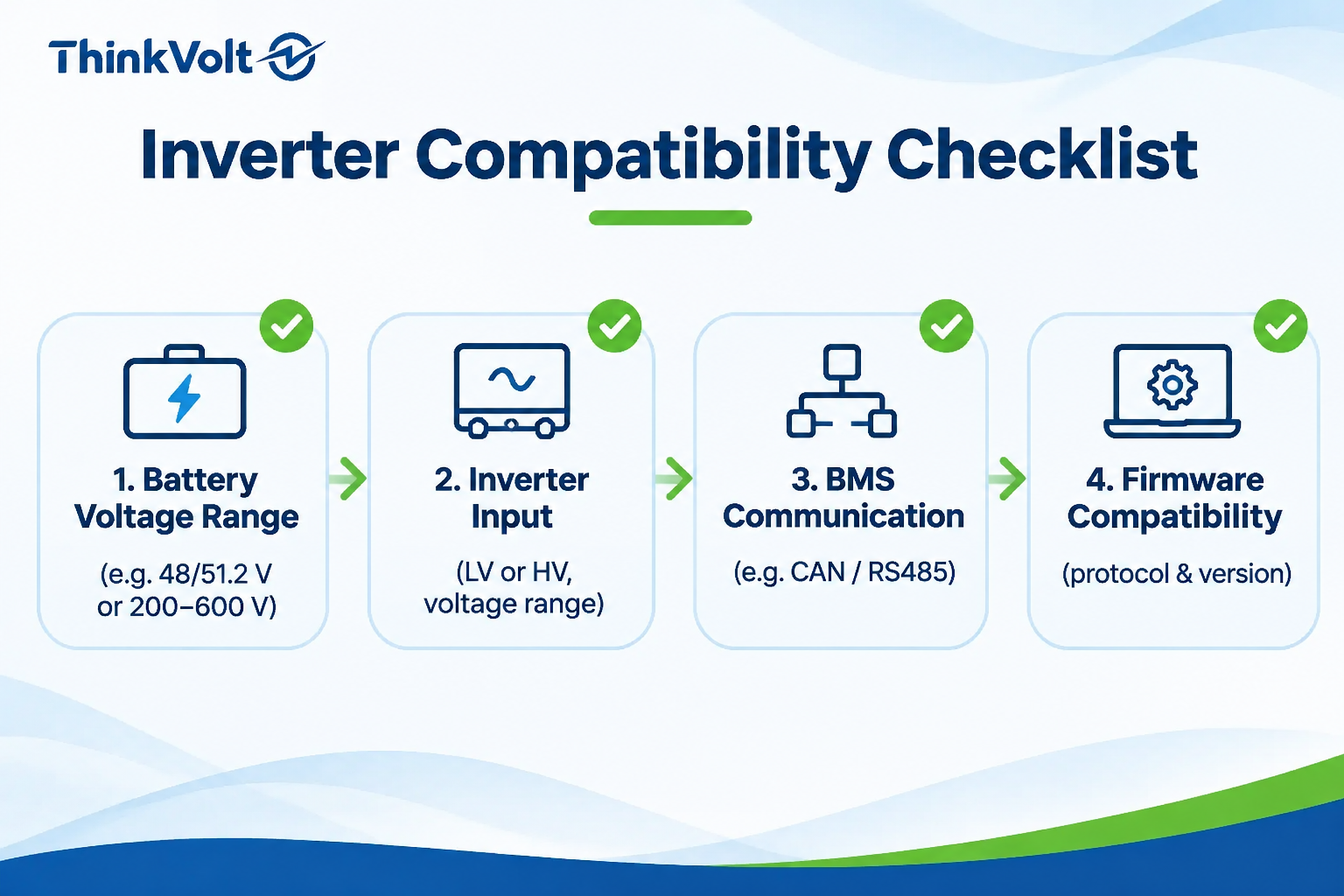
Inverter compatibility is often the deciding factor. An LV battery must be paired with an inverter designed for the battery's voltage range and current capability. An HV battery must be paired with an inverter that supports its voltage window, power range and battery-control architecture. An inverter designed for a 48V battery input cannot simply be connected to a several-hundred-volt battery stack.
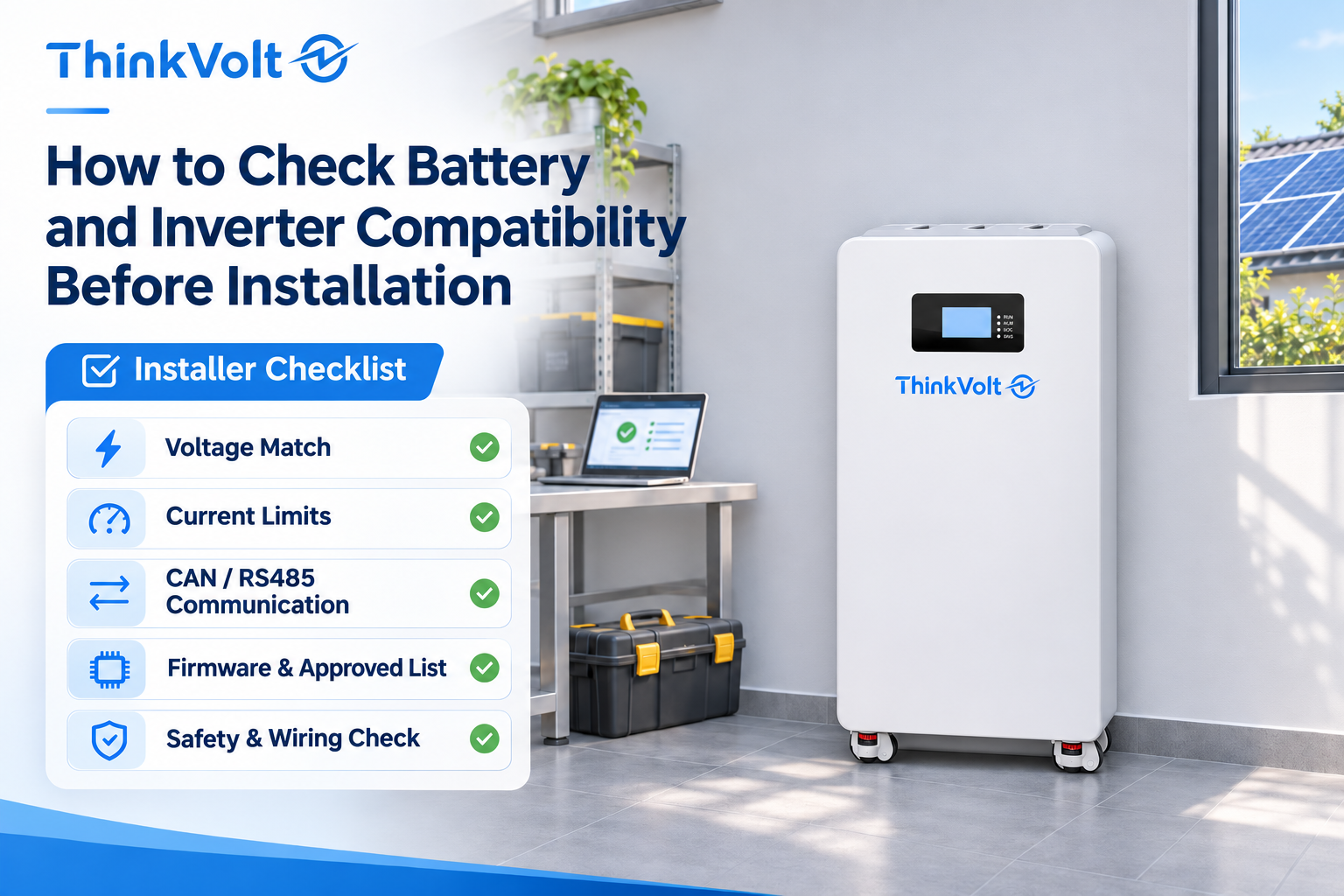
Voltage matching is necessary but not sufficient. Check the exact inverter model, battery model, firmware version, communication protocol, pin assignment, supported charge and discharge limits, and the manufacturer's compatibility list. CAN or RS485 appearing in both product specifications does not by itself guarantee that two devices can communicate correctly. The message map, baud rate, firmware and control logic may differ.
Also confirm whether the inverter supports the required operating modes: grid-connected self-consumption, backup or EPS output, off-grid operation, generator integration, single-phase or three-phase supply, and parallel inverter operation. These functions vary by model and market. Obtain written confirmation for the complete battery-inverter combination before promising compatibility to an end customer.
LV systems commonly expand by adding supported battery units in parallel. This can make staged capacity growth practical, especially when the battery manufacturer supports parallel operation and provides clear rules for module count, cable layout, protection, BMS addressing and commissioning. More parallel units also mean more current paths and connections to design, inspect and maintain.
HV systems commonly expand by adding modules in series within a defined stack. This increases the stack voltage and usable energy while keeping current in the same general range, subject to the system design. The inverter's permitted battery-voltage window limits how many modules can be added. Some systems allow multiple stacks, but this must be explicitly supported by the manufacturer.
Do not assume that a battery can be expanded simply because another unit has the same model name. Confirm age and state-of-charge matching rules, firmware compatibility, maximum module or stack count, cable and protection requirements, and whether the existing inverter can accommodate the expanded voltage or power. Mixing different battery models, capacities or generations is not acceptable unless the manufacturer explicitly approves the configuration.
For maintenance planning, ask how the system identifies a faulty module, whether individual modules can be isolated and replaced, what replacement-matching rules apply, and what diagnostic data can be exported. Consider local service capability and spare-part availability as part of the lifecycle decision.
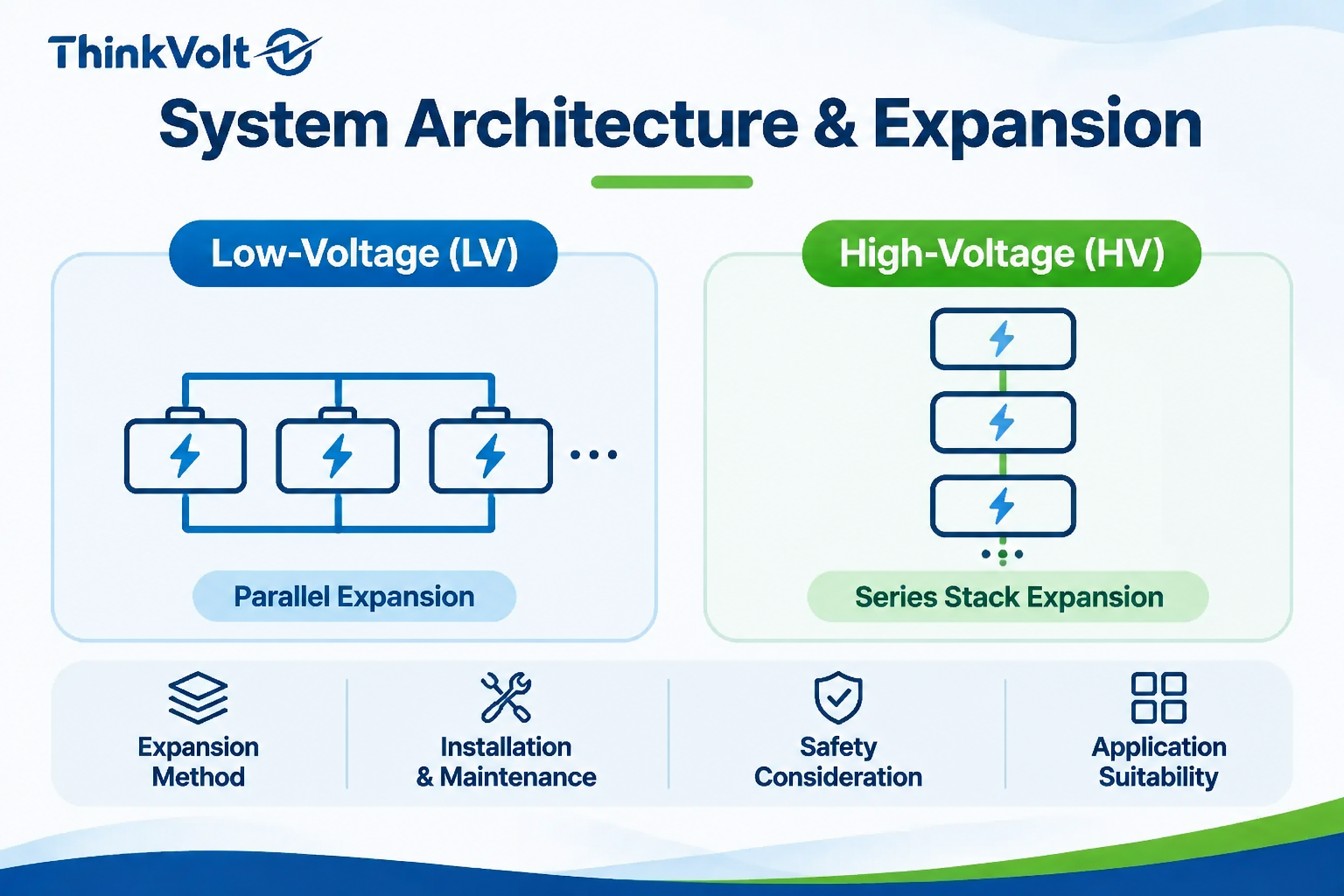
An LV system is often a practical candidate for residential projects using a compatible 48V-class inverter, moderate power requirements, modular capacity growth or an established off-grid architecture. It may also suit distributors whose customers value a familiar product platform and straightforward integration with supported equipment. The final decision still depends on the inverter, current limits, cable design and expansion rules.
An HV system is often worth evaluating when the project uses an HV hybrid inverter, requires relatively high battery power, uses a three-phase residential architecture designed around an HV battery, or benefits from lower battery-side current and a more integrated system platform. These are selection signals, not guarantees: verify the actual inverter and battery ratings, local service capability and system cost.
For distributors, product selection should also reflect the installed base in the target market. Stocking an LV platform may be commercially sensible where compatible 48V inverters are common. An HV range may be more appropriate where installers already deploy matched HV inverter ecosystems. Consider training, technical support, warranty process, documentation, local approvals and replacement availability—not only the battery purchase price.
A useful rule is to shortlist only architectures supported by the selected inverter and then compare their usable energy, continuous and peak power, efficiency evidence, expansion path, installation requirements and total installed cost. There is no universal capacity or power threshold at which every home should switch from LV to HV.
Before preparing a proposal, collect the project information that determines whether the system will operate correctly and meet the customer's expectations. A short technical qualification process can prevent costly compatibility, sizing and commissioning issues.
Use this checklist:
- Application: self-consumption, backup, off-grid, time-of-use operation or a combination.
- Country and grid: grid voltage and frequency, single-phase or three-phase supply, local electrical rules and required approvals.
- Load profile: daily energy use in kWh, peak demand in kW, motor starting current and critical loads.
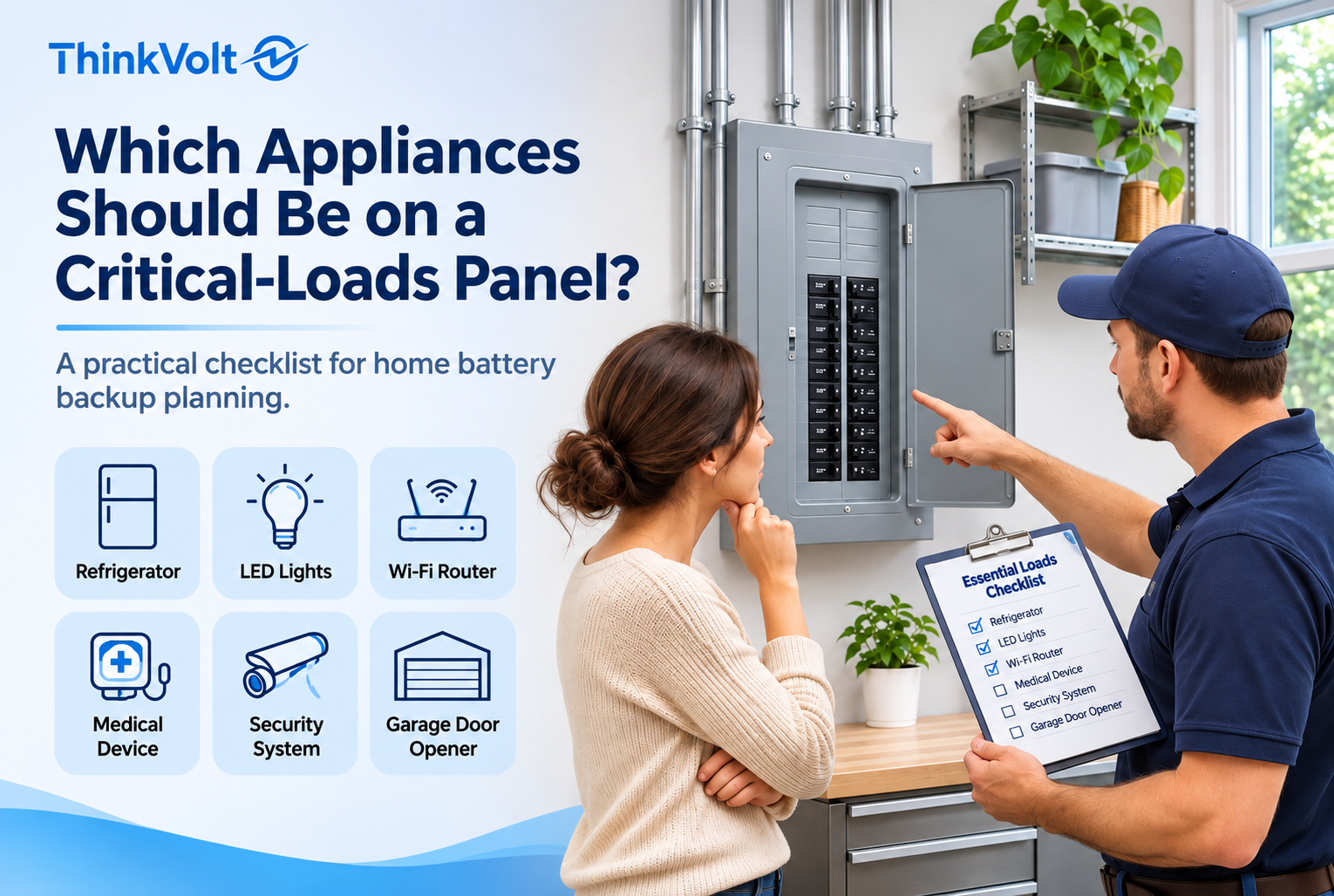
- Backup requirement: which circuits must remain powered and for how many hours.
- Inverter: exact brand, model, battery input voltage range, power rating, firmware and supported battery list.
- Battery: nominal and operating voltage, usable energy, continuous and peak charge/discharge power, BMS limits and protection functions.
- Communication: CAN or RS485 interface, protocol compatibility, firmware and cable/pinout requirements.
- Installation: indoor or outdoor location, temperature, humidity, altitude, available space, ventilation and cable distance.
- Expansion: planned future capacity, maximum supported units, parallel or series configuration and replacement policy.
- Commercial requirements: quantity, destination, certifications, warranty, packaging, delivery schedule and service expectations.
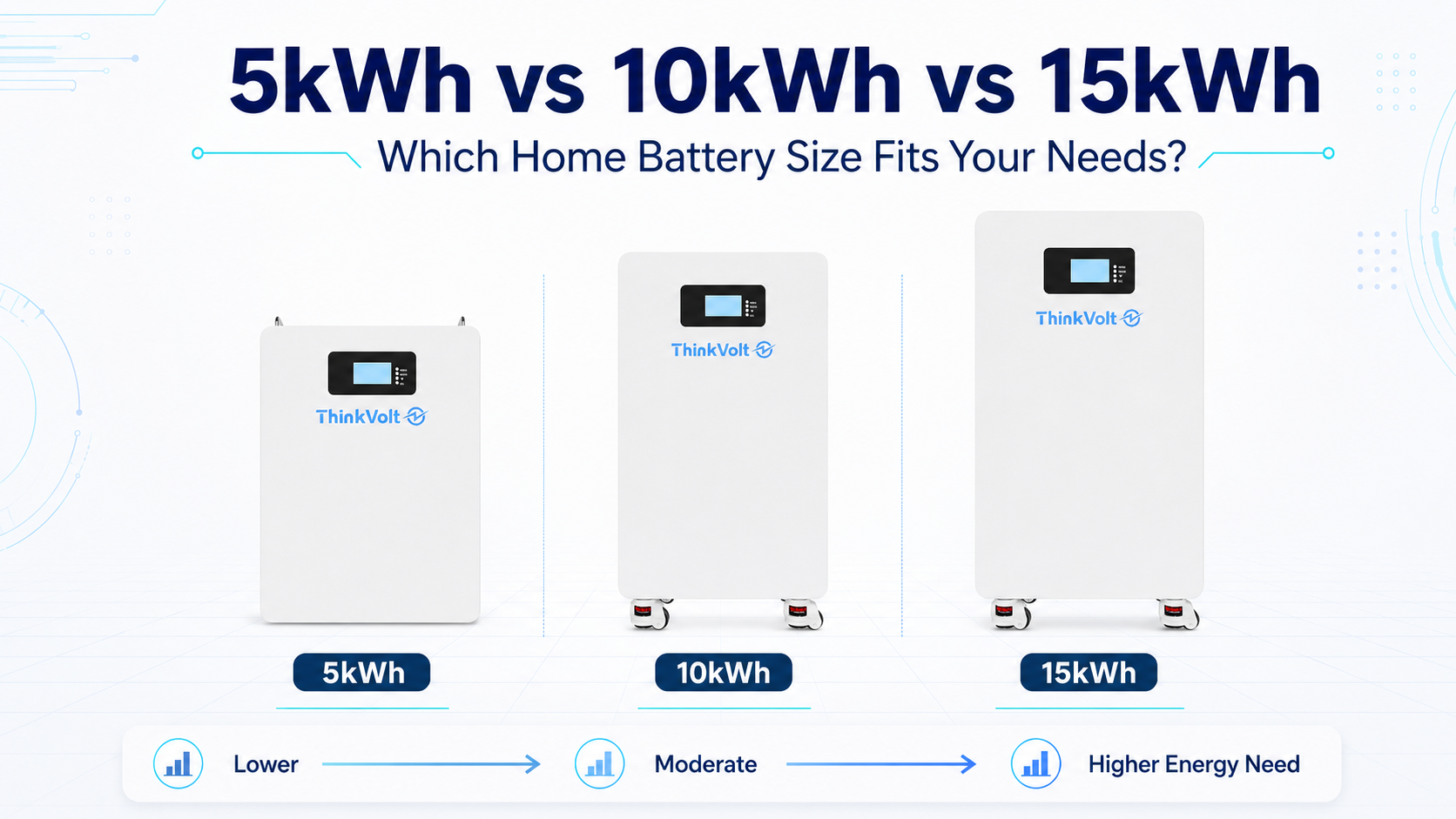
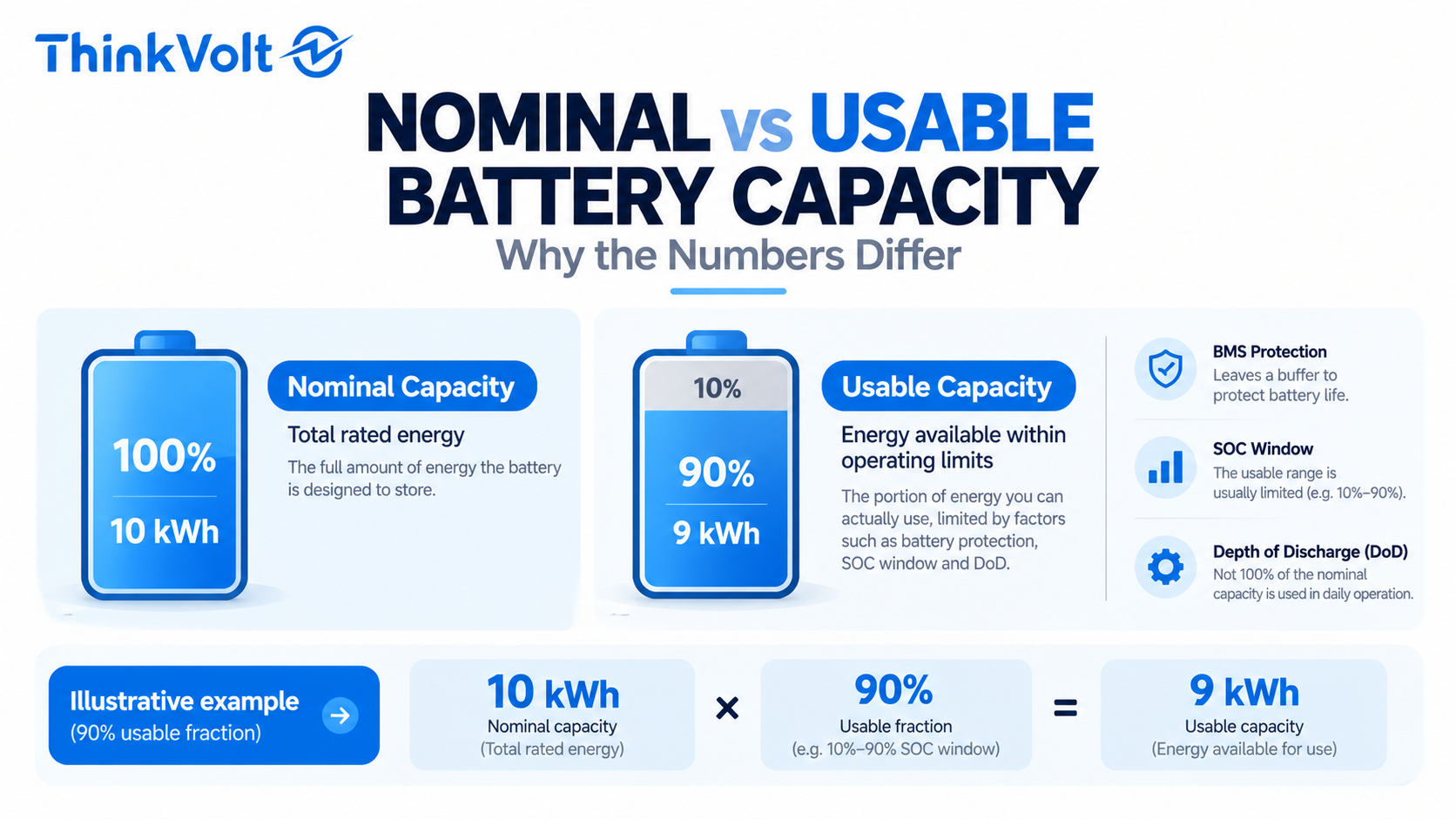
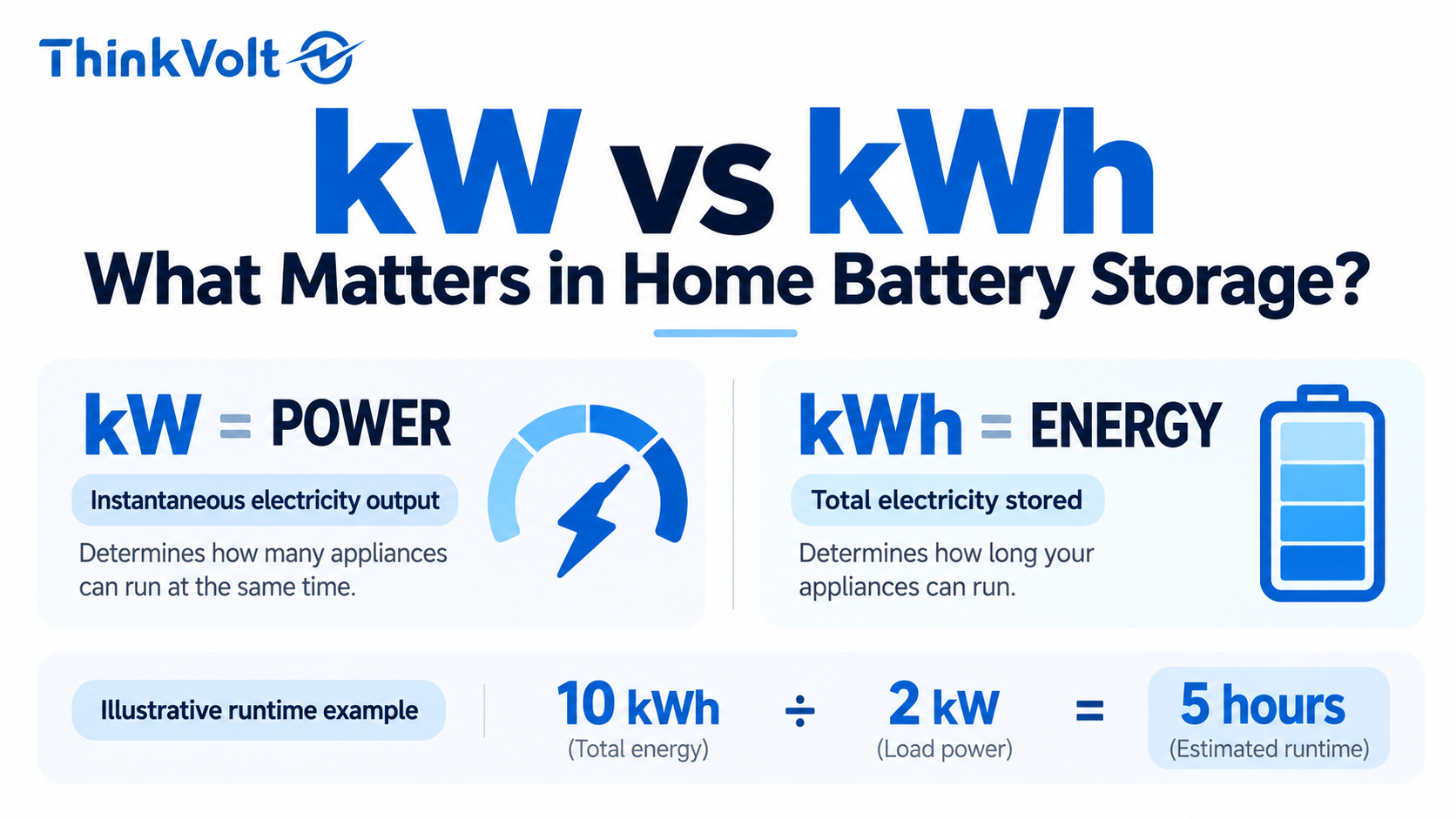
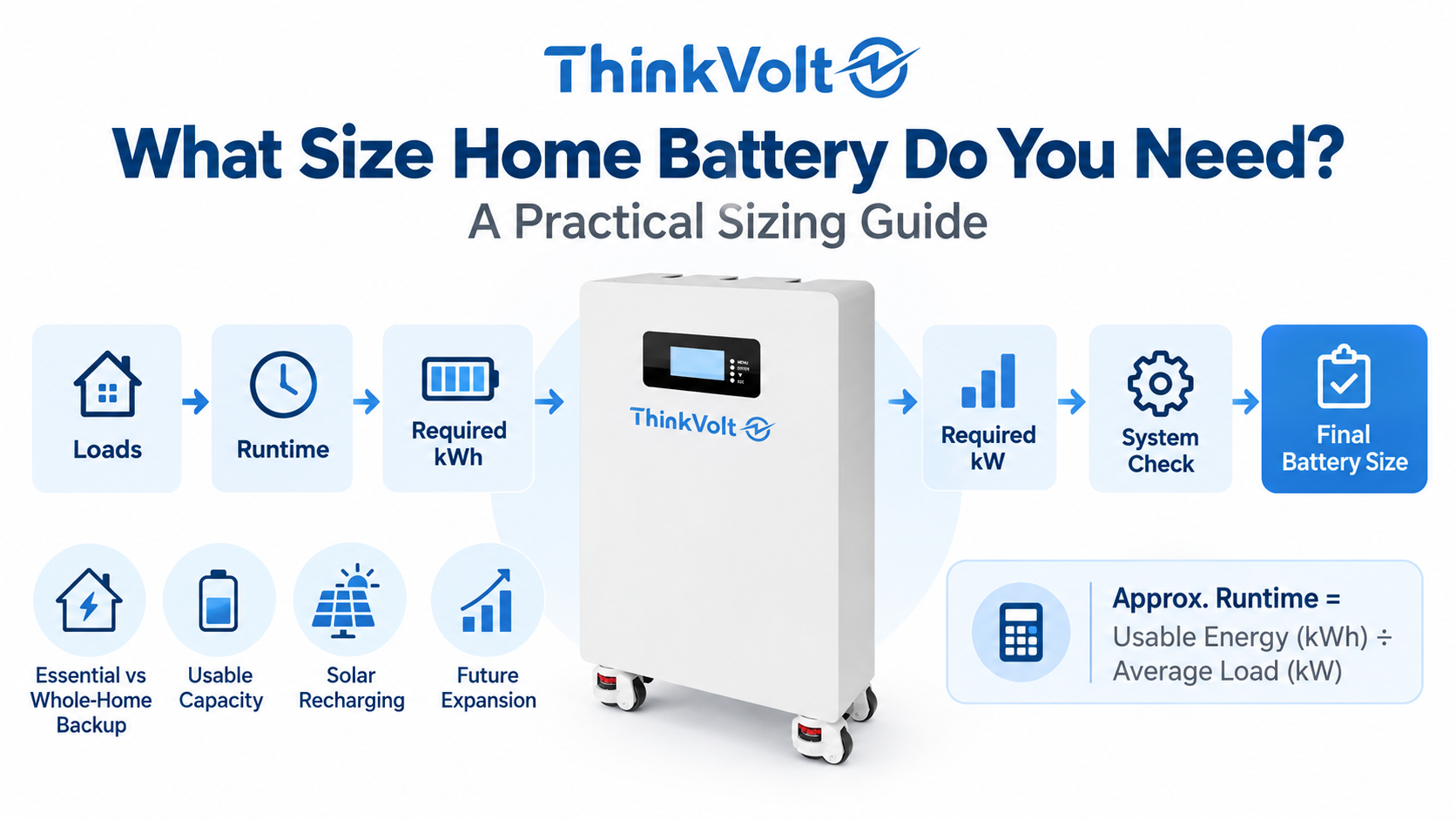
Compare usable energy rather than nominal capacity alone. Check the manufacturer's stated usable kWh and the conditions under which it is measured. Then verify that the battery's continuous discharge power and the inverter's battery-side limits can support the required loads. A large kWh rating does not necessarily mean that the battery can deliver the required kW.
Usually, yes. Residential LV products are commonly marketed as 48V or 51.2V nominal systems. Always check the actual operating-voltage range and manufacturer classification.
They can reduce current and battery-side cable losses at the same power. Overall system efficiency depends on the inverter topology, conversion stages, standby consumption and operating conditions, so compare like-for-like test data.
The voltage level changes the electrical hazards and protection requirements, but neither category is automatically safe. LV systems can deliver high fault currents; HV systems require controls for higher DC voltage and isolation. Follow the exact manuals and local codes.
No, not unless the inverter is specifically designed for that battery voltage and configuration. The battery voltage window and inverter input specification must match.
Many models support parallel expansion, but the maximum number, cable arrangement, BMS settings, protection and commissioning process are model-specific. Confirm the approved configuration before installation.
No. Some three-phase hybrid inverter systems use HV batteries, but phase configuration is an inverter and system-design feature. Confirm the exact product combination and grid requirements.
No. Voltage architecture and cell chemistry are separate specifications. Both LV and HV residential batteries can use LFP cells; verify chemistry on the exact model datasheet.
Request the country, application, load and backup data, inverter model, required usable energy and power, installation conditions, expansion plan, certifications and quantity. These details support a technically sound shortlist and an accurate quotation.
Low-voltage and high-voltage home battery systems solve the same broad storage need through different electrical architectures. LV can be a strong fit for compatible 48V systems and modular residential projects, while HV can be attractive for matched higher-voltage inverter platforms and applications where lower DC current is valuable. The correct choice is the one that meets the project's power and energy needs, works with the exact inverter, can be installed and serviced correctly, and remains expandable within the manufacturer's rules.
If you are evaluating a residential storage project or building a product range for your market, share the country, inverter model, required power and usable capacity, application and target quantity. ThinkVolt can review the application requirements and identify which product information needs engineering confirmation before quotation.